
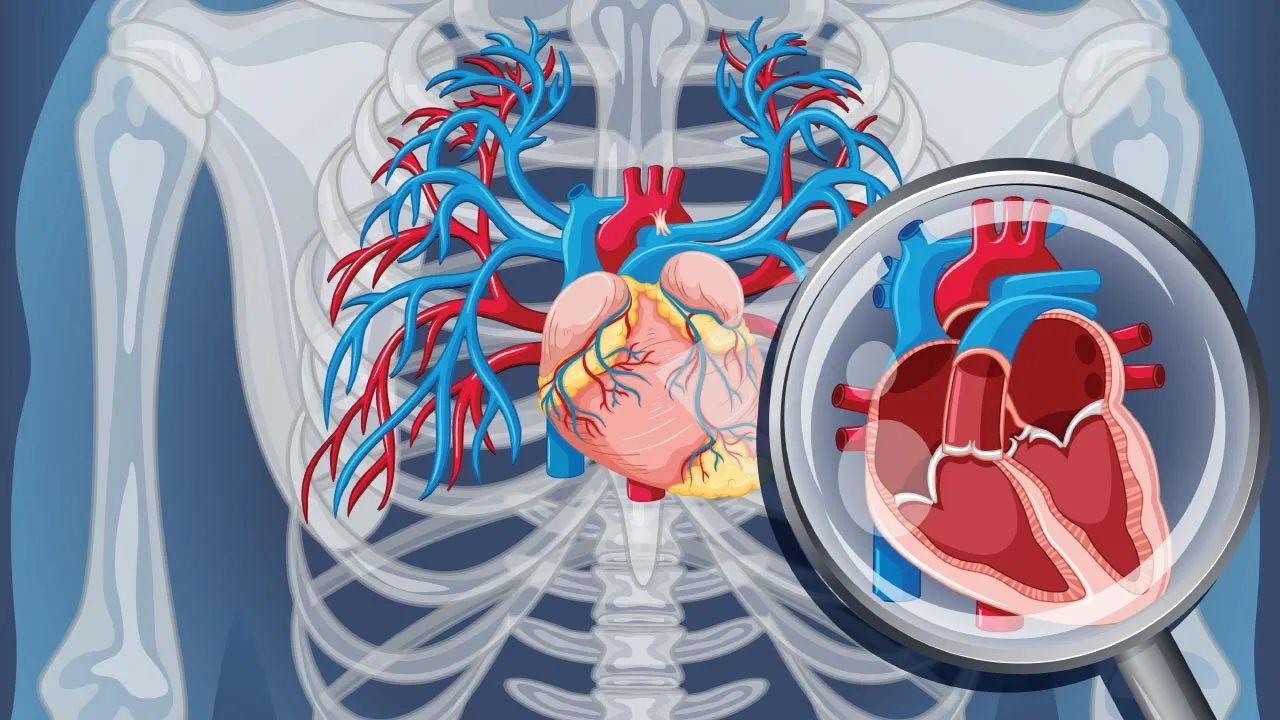
When symptoms such as chest pain, shortness of breath, or unexplained fatigue raise concerns about heart disease, your doctor may recommend tests to evaluate the coronary arteries. Two commonly used investigations are CT coronary angiography and conventional coronary angiography. Although both examine the blood vessels that supply the heart, they are performed differently and serve different purposes.
Understanding the differences between these tests can help you know what to expect and why your cardiologist may recommend one over the other.
Dr. Rohit Kumar provides comprehensive cardiac evaluations and recommends the most appropriate diagnostic approach based on each patient's symptoms, risk factors, and clinical condition.
What Is CT Coronary Angiography?
CT coronary angiography, also called coronary CT angiography (CCTA), is a noninvasive imaging test that uses a CT scanner and contrast dye to create detailed images of the coronary arteries.
The test helps detect:
- Narrowing of the coronary arteries
- Plaque buildup
- Certain congenital abnormalities of the coronary arteries
- Other structural findings involving the heart and nearby blood vessels
Because no catheter is inserted into the arteries, it is considered a noninvasive procedure.
What Is Conventional Coronary Angiography?
Conventional coronary angiography is an invasive procedure performed in a cardiac catheterization laboratory.
A thin catheter is inserted through an artery in the wrist or groin and guided to the coronary arteries. Contrast dye is injected while X-ray images are taken to assess blood flow and identify blockages.
If a significant blockage is found, procedures such as angioplasty and stent placement may sometimes be performed during the same session when clinically appropriate.
CT Coronary Angiography Vs Conventional Angiography
Procedure
CT Coronary Angiography
- Noninvasive
- No catheter placed inside the coronary arteries
- Performed using a CT scanner
Conventional Angiography
- Invasive procedure
- Requires insertion of a catheter into an artery
- Performed in a cardiac catheterization laboratory
Accuracy
Both tests provide valuable information, but they are used in different clinical situations.
CT coronary angiography is highly effective for evaluating many patients with suspected coronary artery disease, particularly those with a lower to intermediate likelihood of significant blockages.
Conventional angiography remains the reference standard for directly visualizing coronary artery blockages and planning interventional procedures.
Your cardiologist will recommend the most appropriate test based on your clinical situation.
When Is CT Coronary Angiography Recommended?
Your doctor may consider CT coronary angiography if you:
- Have stable chest pain
- Have symptoms suggesting possible coronary artery disease
- Need evaluation of coronary anatomy
- Have inconclusive results from other noninvasive cardiac tests
- Require assessment before certain cardiac procedures in selected situations
Not everyone is a suitable candidate for this test.
When Is Conventional Angiography Recommended?
Conventional coronary angiography may be recommended if:
- A heart attack is suspected
- There is a high likelihood of significant coronary artery disease
- Previous tests suggest severe blockages
- Angioplasty or stent placement may be required
- Symptoms remain concerning despite earlier investigations
The decision depends on your symptoms and overall clinical assessment.
Advantages Of CT Coronary Angiography
Potential advantages include:
- Noninvasive procedure
- Short examination time
- No arterial catheter insertion
- Detailed images of coronary arteries
- Useful for evaluating certain patients with suspected coronary artery disease
Like all medical tests, it also has limitations.
Advantages Of Conventional Angiography
Conventional angiography offers several important benefits.
These include:
- Detailed visualization of coronary artery blockages
- Ability to measure the severity of narrowing
- Opportunity to perform angioplasty or place a stent during the same procedure when appropriate
- Assessment of blood flow in real time
These features make it an important diagnostic and therapeutic procedure.
Are There Any Risks?
Both tests involve certain risks.
CT Coronary Angiography
Potential considerations include:
- Exposure to radiation
- Use of contrast dye, which may not be suitable for some patients with kidney disease or contrast allergies
- Occasionally, additional testing may still be needed
Conventional Angiography
Potential risks include:
- Bleeding at the catheter insertion site
- Bruising
- Blood vessel injury
- Infection
- Allergic reaction to contrast dye
- Rare but serious cardiovascular complications
Your healthcare team takes precautions to minimize these risks.
Preparing For The Procedure
Preparation varies depending on the test.
Your doctor may advise you about:
- Fasting before the procedure
- Current medications
- Kidney function tests
- Hydration
- Temporary adjustment of certain medications if necessary
Following these instructions helps improve safety and image quality.
Which Test Is Better?
Neither test is universally better.
The most appropriate investigation depends on several factors, including:
- Your symptoms
- Risk of coronary artery disease
- Previous cardiac history
- Kidney function
- Whether treatment may be needed immediately
- Overall health
Your cardiologist will recommend the test that provides the most useful information for your specific situation.
When Should You See A Cardiologist?
Seek medical evaluation if you experience:
- Chest pain
- Shortness of breath
- Chest discomfort during physical activity
- Unexplained fatigue
- Palpitations
- Multiple cardiovascular risk factors such as diabetes, high blood pressure, high cholesterol, or smoking
Early evaluation helps determine whether further cardiac testing is appropriate.
Conclusion
CT coronary angiography and conventional coronary angiography are both valuable tools for evaluating coronary artery disease. CT coronary angiography provides a noninvasive way to assess the coronary arteries in selected patients, while conventional angiography remains the gold standard for confirming significant blockages and performing treatments such as angioplasty when needed.
The choice between these tests depends on your symptoms, medical history, and overall clinical picture. Dr. Rohit Kumar provides personalized cardiac evaluations and recommends the most appropriate diagnostic approach to help patients receive timely and effective heart care.
FAQs
Q: Is CT coronary angiography painful?
A: CT coronary angiography is a noninvasive imaging test and is generally not painful. An intravenous line is used to administer contrast dye.
Q: Can CT coronary angiography replace conventional angiography?
A: Not always. While CT coronary angiography is valuable for many patients, conventional angiography may still be necessary when significant blockages are suspected or treatment such as angioplasty is likely to be required.
Q: Which test is more accurate?
A: Both tests are highly useful in different situations. Conventional angiography remains the reference standard for directly assessing coronary artery blockages.
Q: How long does conventional angiography take?
A: The procedure usually takes about 30 to 60 minutes, although the total hospital stay may be longer depending on your condition.
Q: Will I need treatment immediately after conventional angiography?
A: If a significant blockage is identified and it is clinically appropriate, your cardiologist may recommend angioplasty and stent placement during the same procedure.
If you have chest pain, risk factors for heart disease, or have been advised to undergo coronary artery evaluation, schedule a consultation with Dr. Rohit Kumar. He provides comprehensive cardiac assessments and recommends the most appropriate diagnostic tests based on your individual health needs.


