
If you've been experiencing symptoms like palpitations, dizziness, fainting, or an irregular heartbeat, your doctor may recommend tests to evaluate your heart's electrical activity. Two of the most commonly used tests are an electrocardiogram (ECG) and a Holter monitor.
Although both tests assess your heart rhythm, they serve different purposes. Understanding how they work can help you know why one test may be more appropriate than the other.
What Is an ECG?
An electrocardiogram (ECG) is a quick, painless test that records the electrical activity of your heart at a specific moment in time.
During the test, small adhesive electrodes are placed on your chest, arms, and legs. These electrodes detect electrical signals generated by your heart, and the information is displayed as waveforms that your doctor interprets.
An ECG usually takes only a few minutes and is commonly performed in clinics, hospitals, emergency departments, and health checkups.
What Can an ECG Detect?
An ECG can help identify:
- Abnormal heart rhythms (arrhythmias)
- Evidence of a heart attack or previous heart attack
- Changes suggesting reduced blood flow to the heart
- Certain heart muscle or conduction abnormalities
- Effects of some medications or electrolyte imbalances
Because it records only a brief snapshot, an ECG works best when symptoms are present during the test.
What Is a Holter Monitor?
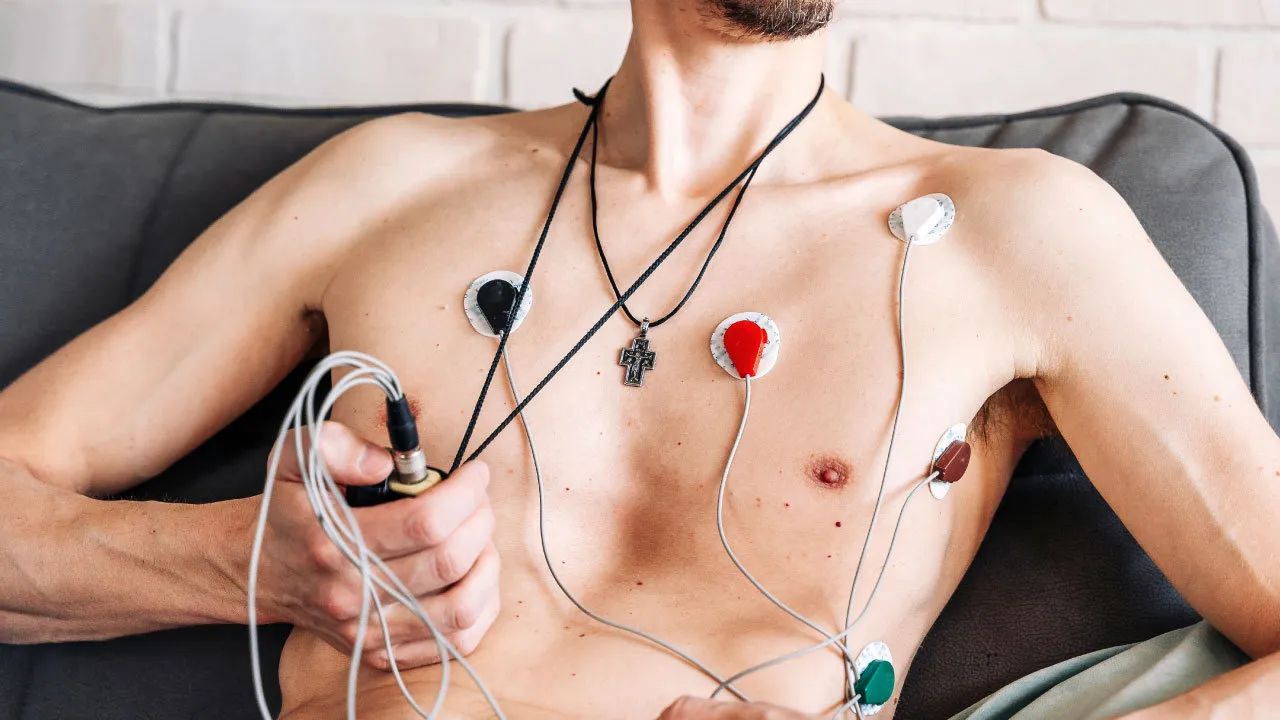
A Holter monitor is a small, portable device that continuously records your heart's electrical activity while you go about your normal daily routine.
Like an ECG, adhesive electrodes are attached to your chest, but instead of recording for a few seconds, the monitor records continuously, usually for 24 to 48 hours. In some situations, your doctor may recommend longer periods of ambulatory ECG monitoring using other wearable devices.
During the recording period, you'll be asked to keep a diary of your symptoms and activities. This helps your doctor correlate any symptoms with changes in your heart rhythm.
When Is a Holter Monitor Recommended?
Your cardiologist may suggest Holter monitoring if:
- Your ECG is normal but symptoms continue
- You experience occasional palpitations
- You have unexplained dizziness or fainting
- An irregular heartbeat is suspected
- Your heart rhythm needs to be monitored after starting treatment
- Your doctor wants to assess the frequency of known arrhythmias
Since it records continuously, a Holter monitor is more likely to detect intermittent rhythm abnormalities that may not appear during a standard ECG.
Holter Monitor vs ECG: Key Differences
ECG
- Recording Duration: A few seconds
- Purpose: Provides a snapshot of heart activity
- Location: Usually performed in a clinic or hospital
- Best For: Detecting ongoing or immediate heart abnormalities
- Patient Activity: Typically performed while resting
Holter Monitor
- Recording Duration: Usually 24 to 48 hours
- Purpose: Provides continuous monitoring of heart activity
- Location: Worn at home and during daily activities
- Best For: Detecting intermittent heart rhythm abnormalities and symptoms
- Patient Activity: Records heart activity during your normal routine
Rather than replacing each other, these tests often complement one another.
Which Test Is Right for You?
The right test depends on your symptoms and how often they occur.
An ECG is usually the first step because it's quick, widely available, and provides valuable information immediately.
If your symptoms occur only occasionally or your ECG is normal despite ongoing complaints, your doctor may recommend Holter monitoring to increase the likelihood of detecting an abnormal heart rhythm.
Your cardiologist will determine the most appropriate test based on your medical history and clinical findings.
Both Tests Play an Important Role
An ECG and a Holter monitor are valuable tools for diagnosing heart rhythm disorders, but they answer different questions. While an ECG captures what's happening with your heart at one specific moment, a Holter monitor provides a much broader picture by recording your heart rhythm throughout your daily activities.
If you've been experiencing unexplained palpitations, dizziness, fainting, or irregular heartbeats, don't ignore these symptoms. The right diagnostic test can help identify the cause and guide timely treatment.
Discuss Your Heart Rhythm With Dr. Rohit Kumar
If you're experiencing palpitations, dizziness, fainting, or an irregular heartbeat, consult Dr. Rohit Kumar for a comprehensive cardiac evaluation. Whether you need an ECG, Holter monitoring, or additional heart rhythm testing, a personalized diagnostic approach can help identify the cause of your symptoms and guide the most appropriate treatment.
Frequently Asked Questions
Q: Is a Holter monitor better than an ECG?
A: Not necessarily. They serve different purposes. An ECG records your heart's activity at one point in time, while a Holter monitor records continuously over a longer period.
Q: Can I carry out my normal activities while wearing a Holter monitor?
A: Yes. Your doctor will usually encourage you to continue your usual routine so the monitor can capture your heart rhythm during everyday activities.
Q: Is wearing a Holter monitor painful?
A: No. The monitor is noninvasive and painless. Some people may experience mild skin irritation from the adhesive electrodes.
Q: What if my symptoms don't occur during Holter monitoring?
A: If symptoms are infrequent, your doctor may recommend a longer-term cardiac event monitor or another type of ambulatory ECG monitoring.
Q: Do I need any special preparation for these tests?
A: Generally, no special preparation is required. Your healthcare team will provide instructions specific to your test.


